Mourning


Death
Life is permeated by mysteries, of which birth and death are the most inescapable. While birth is celebrated with joy, death is seen as a tragic and melancholic event, although some religious beliefs, such as Christianity, advocate for the resurrection of the soul. In the Peneda-Gerês National Park , in Portugal, death rituals are deeply rooted in Catholic tradition, creating a rigid protocol to express the grief of the bereaved family to society.
However, even in this region, ancient legends associated with death still linger, such as the Acompanhamento and the Berrega .

Black
The color black, a symbol of mourning, was universally adopted by men, women, and children, without a specific origin. In science, black represents the absence of light and color, thus being representative of the absence of happiness. During the mourning period, displays of joy, such as the wearing of jewelry and gold, were abandoned, and a remarkable effort was made to properly mourn the loss of a loved one. Weddings were postponed, festive activities were suspended, and the slaughter of animals was avoided until the period of full mourning had passed, when the transition to a lighter mourning began, which could last up to two years.
The Passing
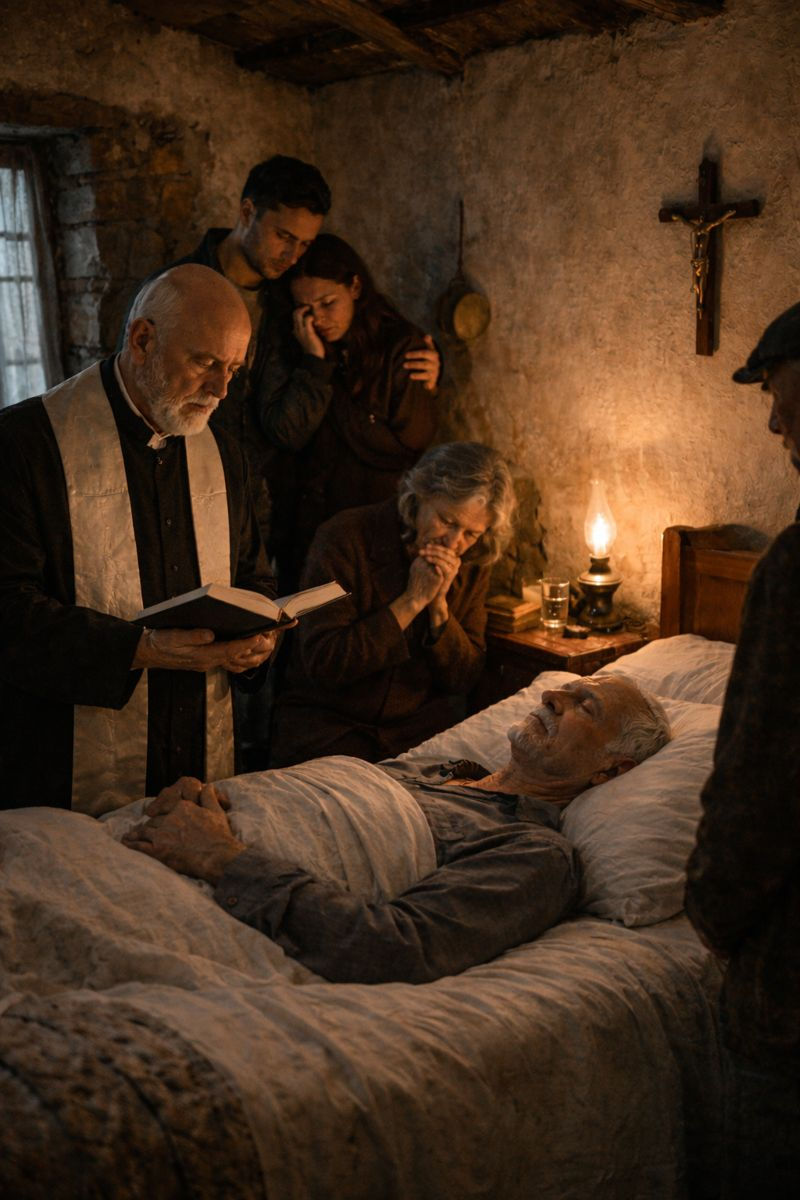
The announcement of a death traditionally occurred through the ringing of the church bell, known as "tolling," and, in more modern times, through loudspeakers that informed the community about the deceased and the details of the funeral celebrations. Regarding the wake, tradition dictated that most of the deceased were not taken to the church, but rather kept at home. During this period, the house was stripped of decorations, and even the clock was removed to avoid the sound of the pendulum. Furniture was removed, chairs were borrowed from the neighborhood, and even the water from the jugs and the sausages in the chimneys were taken out.

The Wake
The practice of keeping vigil beside the coffin, specifically the act of watching over or guarding, originated from the fact that people were buried alive, justified by scratches on the coffin lids, indicating that the deceased had in fact been buried alive. This phenomenon occurred due to the use of tin cups for drinking beer or whiskey, a combination that sometimes left the individual in a kind of coma induced by the mixture of alcoholic beverage with tin oxide, accidentally simulating death. Thus, upon closing the coffin, the idea arose of tying a bell (campana) to the deceased's wrist with a string. After the burial, someone would stand guard near the grave for a few days. If the individual woke up, the movement of their arm would ring the bell. This phenomenon is the origin of the current name for the tombstones (stone structures) placed in cemeteries.
Flowers have a meaning. Although nowadays they represent a symbolic act of affection, in other times they were used to mask smells.

Clothing
The deceased's body was carefully prepared, dressed in the finest clothes, often chosen beforehand, and placed on the bed. Mourning rituals involved profound expressions of grief, with intense weeping, eulogies for the deceased, and lamentations for their fate. Traditionally, this task was performed by women of the family, but in some cases, professional mourners were hired to express the grief of the bereaved family. For deceased children, especially girls, the rituals were adapted. The children's bodies were placed in white urns and carried to the cemetery by older children (the crusade). In the case of a young maiden, she was dressed as a bride, complete with a wreath. The seventh-day mass, a Catholic tradition, was associated with the seven days of mourning, referencing biblical passages that highlight this practice. Women, in mourning, dressed in black, almost completely covering their faces, and those who did not follow this tradition, considered a sign of almost religious respect, were socially frowned upon.

The Day-to-Day
The influence of mourning rituals in the region also extends to clothing, such as the Dark Attire or Dó, worn by the widows of the living to symbolize the pain of separation caused by the temporary or permanent absence of a loved one. The predominant black color in this attire reflects the tone associated with mourning.
Thus, in the Peneda-Gerês National Park, Catholic tradition intertwines with local culture, shaping the rituals of death and mourning in ways that respect and honor the lives of those who have passed, while offering solace to those who remain.
.jpg)
.jpg)
.jpg)
.jpg)
.jpg)