The Beast of Castro Laboreiro


Once upon a time…
Legend has it that, in the 19th century, in the heart of the Peneda-Gerês National Park , more precisely in the village of Castro Laboreiro , a beast was spreading terror, attacking people and animals. It all began with the recording of the first attacks in nearby Galician villages. However, as is common with predators, they tend to cover large hunting areas, as is the case with the wolf, which can cover an area of up to 200 km².
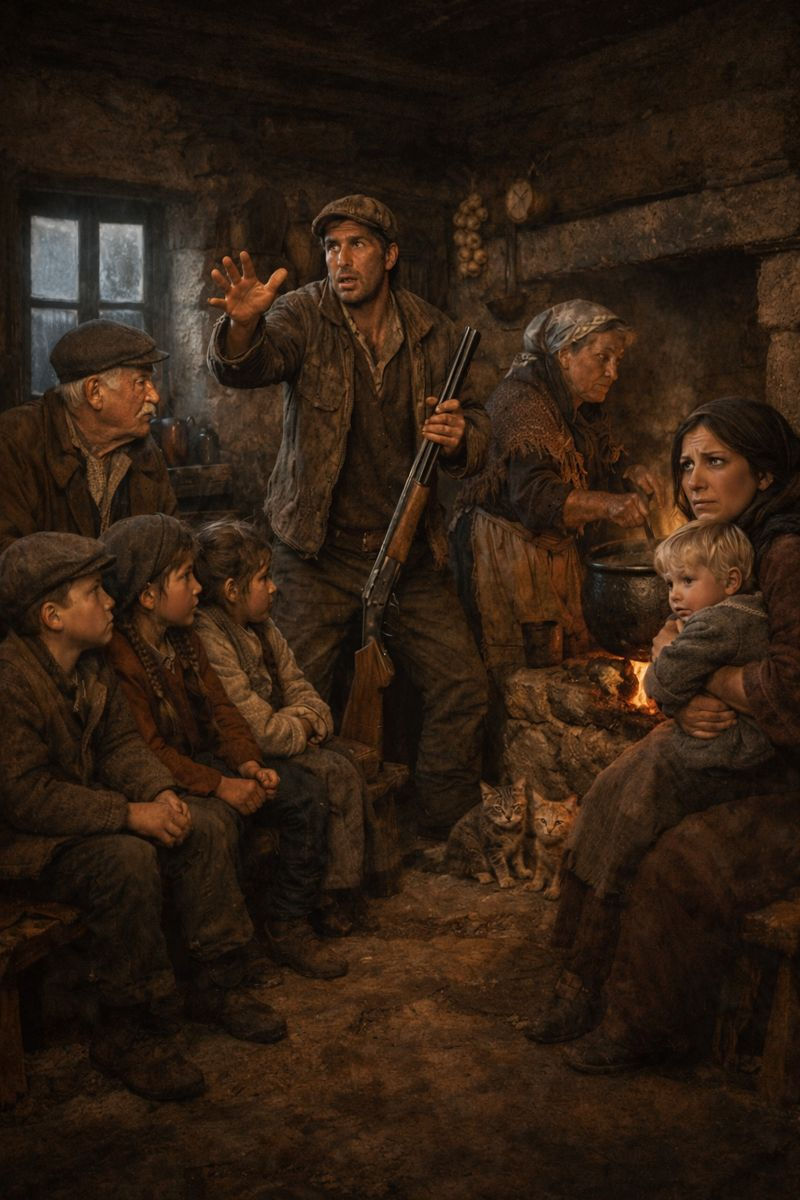
The appearance of animal carcasses, and sometimes human carcasses, began to occur closer and closer to the villages. On a single day, two poor children disappeared, only to be found dead later. Faced with the alarming increase in these events, a nighttime curfew was decreed, and during the day no one dared to leave their house without being armed and accompanied.

Consumed by fear and imagination, rumors of a supernatural nature began to circulate regarding the creature. Since Castro Laboreiro was a land of wolves, initially the blame was placed on them. However, it soon became clear that it wasn't the wolf they lived with that was responsible for such misfortune. From wolves they began to speak of a werewolf, an unworthy child, cursed by its own parents. There were even those who believed it to be a tormented soul or even the devil himself.

Accustomed to carrying out large-scale hunts for wolves and, until the 18th century, for bears, the men decided to put an end to the terror. Armed with firearms and agricultural tools, the men from the affected localities organized a large hunt for the beast. They gathered near the chapel of Alcobaça, between Fiães and Castro Laboreiro, and more than three hundred men advanced through the Ramalheiras forest.

However, the beast was not found. Nevertheless, during the raid, a young shepherd was found seriously injured. When questioned about what had happened to him, the boy stated that he had seen the creature, describing it as enormous and with large claws. He had only survived thanks to his cows, which, as a group, charged at the predator and made it flee. In the following years, the beast continued to be sighted in the vicinity, until finally, it disappeared without a trace. It was never determined for sure what kind of animal was responsible for the attacks. However, based on the accounts of the few who claimed to have seen and survived it, the hypothesis was raised that it was a large feline, possibly a tiger that had escaped from a traveling circus.

Myth or reality?
In Portugal, there have been reports of deadly attacks by unknown beasts or creatures in regions such as Montalegre, Chaves, and Melgaço, the latter case being known locally as the "Beast of Castro Laboreiro" or "Beast of Fiães." Transmitted mainly orally and with few official documents or periodicals preserved to this day that clarify the actual events, the story of this creature is now classified as a legend, with neither the animal nor the perpetrator of the attacks ever having been identified with certainty.

Between the 17th and 19th centuries, numerous such cases were recorded, with France being the country with the highest number of occurrences and victims. With over a hundred documented attacks, the episodes of the Beast of Gévaudan, the Cévennes, or the so-called "wolves" of Soissons, Sarlat, and Périgord became among the best known to this day. In some localities, however, collective fear and religious fervor also gave rise to witch hunts and alleged werewolves, with responsibility for inexplicable deaths attributed to several men and women, as in the case of the alleged Galician werewolf Manuel Blanco Romasanta in Spain. In England, similar phenomena were associated with werewolves or ghostly creatures, such as the famous black dogs known as Barghest, Black Shuck, or Gytrash.
.jpg)
.jpg)
.jpg)
.jpg)
.jpg)