Procession of the Souls

Once upon a time...
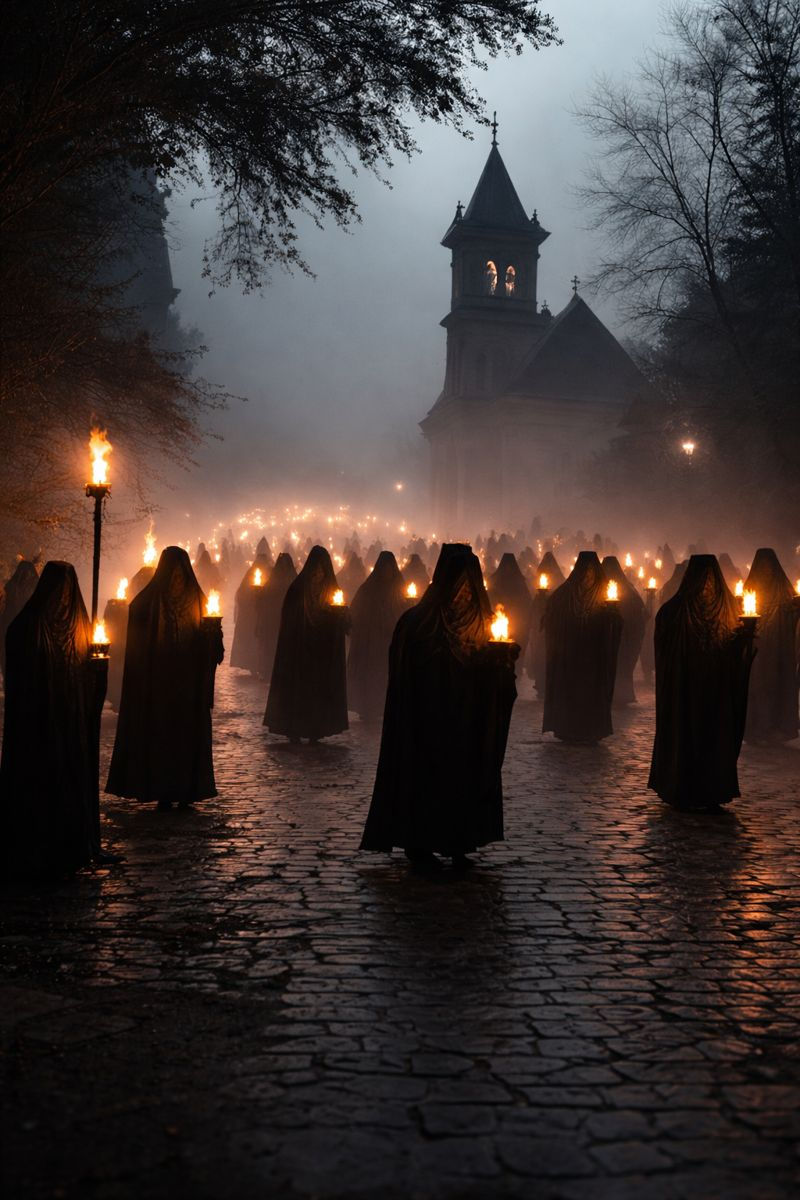
Since time immemorial, in northern Portugal and northern Spain, there existed a legend feared by all: the Acompanhamento. It was said that this phenomenon occurred on dark nights, especially in the seven days preceding the passing (death) of someone in the village. The Acompanhamento was a procession of tormented souls, known as Estântegas, who wandered through the villages in search of those who were about to die.
It was said that it was possible to identify who was destined to die soon by seeing the person in the procession. In the villages, there was always someone who claimed to see the procession with their own eyes (people with their bodies uncovered), thus knowing who was about to die, and others who claimed to hear the bell. Also, those who possessed the Book of Saint Cyprian could see.
"Flano tal isn't going to last. He was going to Acompanhamento one night!"

The procession took place at midnight, to the sound of 12 chimes. As the procession passed, it left behind an intense smell of burnt candle wax. There are accounts that as the procession passed, people were pushed to the sides of the roads, cars mysteriously shut off, and anyone who dared to look back would receive a loud "snap" without knowing where it came from.
"When you come home, don't look back!"

At crossroads and intersections, stopping was forbidden, as it was believed that the Accompaniment rested there. On dark nights, it was advisable to walk on the shoulders of the roads, never in the middle. People avoided entering their homes before midnight, and anyone who felt the presence of the Accompaniment would be paralyzed, unable to move, or, in some accounts, forced to walk with the tormented souls throughout the night.

Furthermore, there was the Berrega or Pito da Morte (Death's Whistle) , which would ring in the village where someone was about to die. Superstition went even further, claiming that if the bells tolling for the dead rang after they had stopped, it meant another death was about to happen. Dogs howled all night in places where deaths occurred, and the atmosphere was thick with fear on nights when the Acompanhamento (a procession of mourners) could be seen. Even with the passage of time, belief in these traditions persisted, and people maintained rituals to protect themselves from the Acompanhamento. Crosses, holy water, and other symbols were used as defense against the supernatural forces that marked the passage of these haunted processions. On Christmas Eve, it is still a tradition to leave food on the table for the souls of family members to come and feast on.

Did you know that...
Regarding the more macabre legends characteristic of the Peneda-Gerês National Park , there are real legends like that of the Old Man of Cabreiro ; however, the Acompanhamento legend is more of a myth.
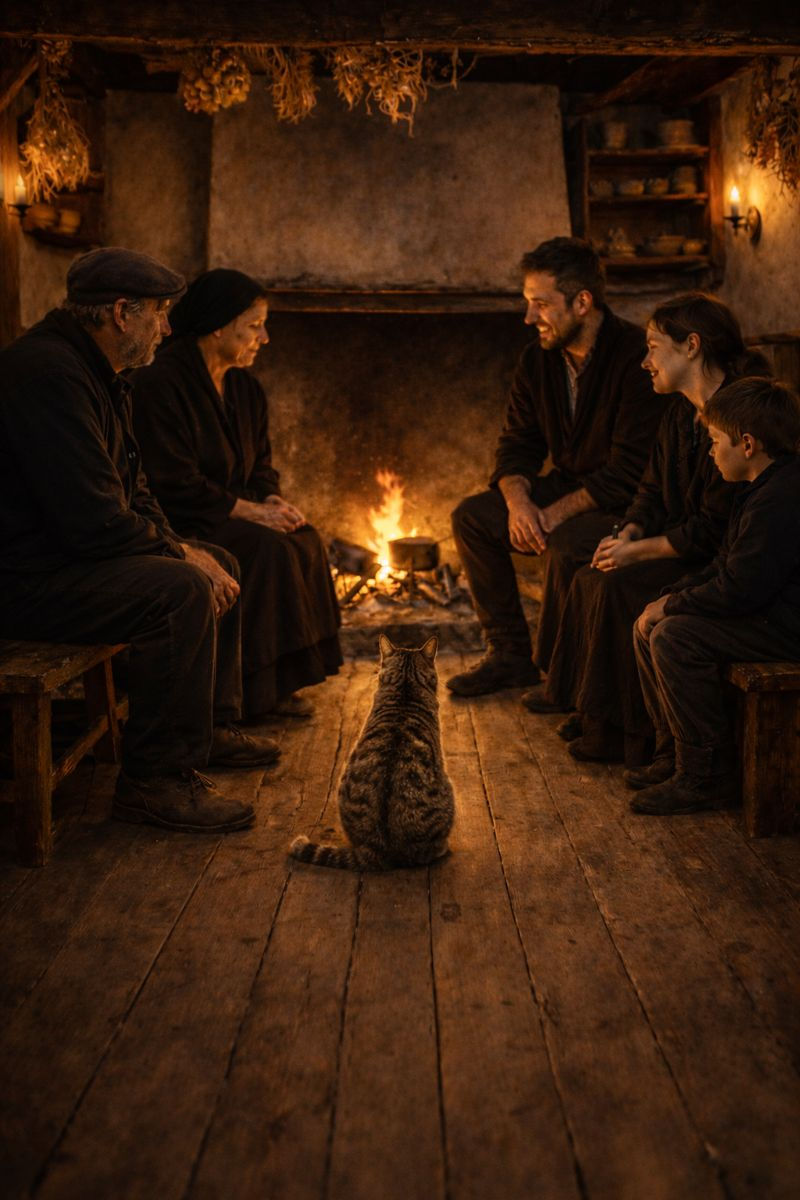
The origin of the legend of the Accompaniment is motivated by several factors. In medieval times, and even "until recently," there was no television, radio, or other type of sound entertainment. In the villages, various noises could be heard during the night, including the bells of cows (bells). People would have what was called an evening gathering, going to their neighbors' houses to chat or even court. So, to prevent the younger ones from returning home late, parents would tell them to come inside before midnight because of the Procession of the Dead.
.jpg)
.jpg)
.jpg)
.jpg)
.jpg)